
Access to learning
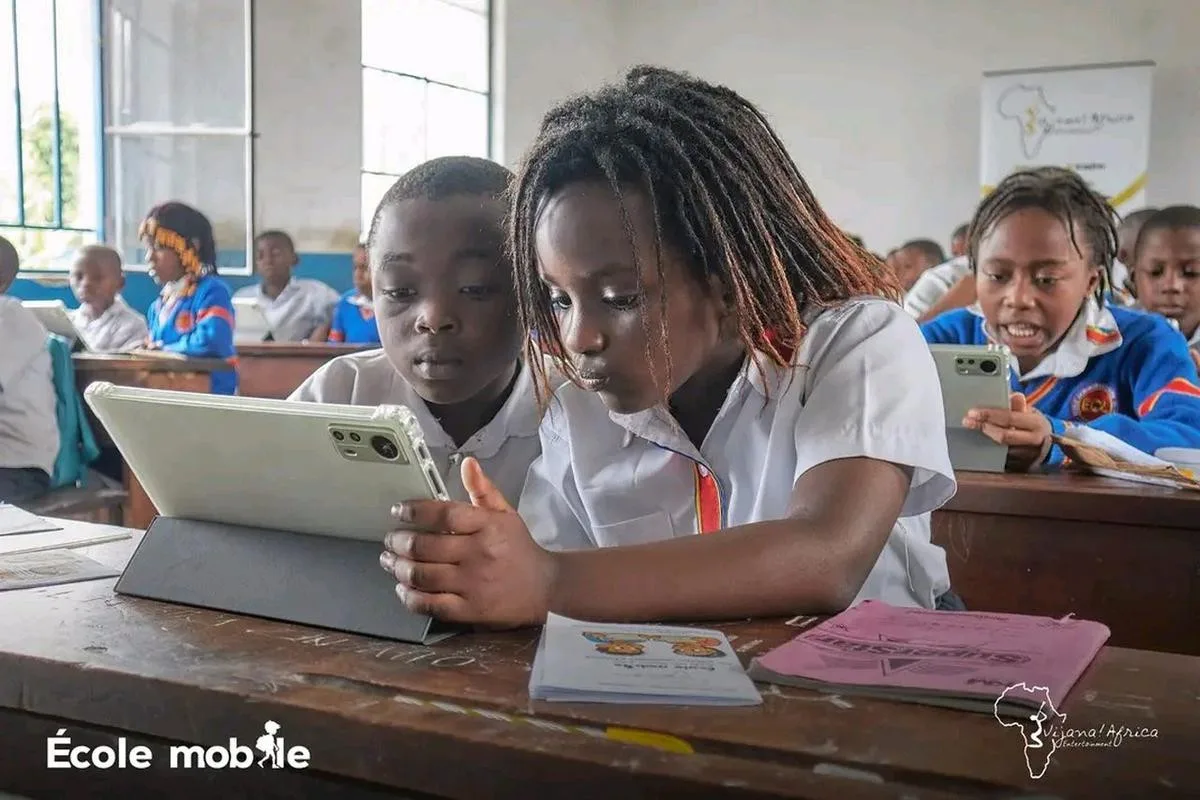
Tablets, learning materials, and trained facilitators travel to partner schools rather than requiring children to reach a fixed site.
Education & Digital Inclusion
Our Vijana Mobile School brings tablets, learning materials, and trained facilitators into partner schools in Goma. Since 2024, we have recorded 770 training participations across the program — 450 in 2024, 160 in 2025, and 160 in 2026.
770 training participations
2024–2026 annual progression: 450 → 160 → 160
Counted by calendar year as training participations, not unique individuals. This figure replaces our earlier 2025–2026 school-year count rather than adding to it.
92% developed digital-tool skills
From our field team’s end-of-program assessment
At the start of the program, 61% of children had been unfamiliar with or without access to tablets.
60 children / 3 schools
Summer learning camp with Creative Humanity, Jul 8 – Aug 27, 2026
From our field reporting.
We built this program to support partner schools and teacher sustainability, not only to provide emergency learning for displaced children. Our teacher-training and transfer model equips local teachers to continue the approach after our program team moves on.
Block-coding activities are part of our plans for the program’s next phase.
Alongside our school-year program, we ran a summer learning camp with partner organization Creative Humanity from July 8 to August 27, 2026, reaching 60 children from three schools through educational games, art, crafts, tablet activities, and health learning.
Tablets, learning materials, and trained facilitators travel to partner schools rather than requiring children to reach a fixed site.
A teacher-training and transfer model aims to sustain the approach locally, beyond any single program cycle.
We require informed consent and a safeguarding review before publishing any story involving a child.
Figures above reflect our own program reporting, and each one notes what it measures.